

Collagen is defined as the primary structural protein in human skin, forming the fibrous network that keeps skin firm, smooth, and resilient. The role of collagen skincare extends far beyond a single cream or supplement. It encompasses a spectrum of topical products, oral peptides, and collagen-stimulating actives, each working through distinct mechanisms with meaningfully different results. Understanding those differences is what separates a thoughtful skincare ritual from one built on wishful thinking.
What does the role of collagen skincare actually mean?
Collagen is not a single substance. Types I and III collagen are the most abundant in human skin, and they form the structural scaffolding that gives skin its lift and density. Type I provides tensile strength, while Type III contributes softness and elasticity. Together, they define how your skin looks and feels at every age.
Collagen production decreases with age and environmental stress, weakening skin architecture and reducing resilience. That decline is gradual but cumulative. By the time fine lines and sagging become visible, the underlying collagen network has already been compromised for years. This is why collagen skincare, in its various forms, has become one of the most discussed categories in modern beauty.

The distinction that matters most is this: collagen can be applied to the skin, consumed as a supplement, or stimulated from within through targeted ingredients. Each path produces a different outcome, and knowing which path serves your skin goals is the foundation of a genuinely effective routine.
How do topical collagen products work?
Topical collagen products act as humectants that hydrate and plump the skin’s surface, but they do not replace structural collagen in the dermis. This is the most important fact to understand about collagen creams and serums. The collagen molecule is simply too large to pass through the epidermis and reach the dermal layer where structural collagen lives.
Hydrolyzed collagen peptides are easier for skin to absorb than intact collagen molecules, but they still primarily affect the epidermis rather than the deeper dermis. The result is improved surface hydration and a temporary plumping effect, which can make fine lines look softer after application. That is a real and worthwhile benefit. It just is not the same as rebuilding your skin’s collagen matrix.
What topical collagen products genuinely deliver:
- Surface hydration: Collagen peptides draw moisture to the skin’s surface, improving texture and softness.
- Temporary plumping: Humectant effects reduce the appearance of fine lines for hours after application.
- Amino acid support: Amino acids like glycine, proline, and hydroxyproline in formulations can support collagen synthesis even when no intact collagen is present.
- Skin barrier comfort: Collagen-based creams create a light occlusive layer that reduces transepidermal water loss.
Pro Tip: When reading collagen product labels, look for “hydrolyzed collagen” or listed amino acids like glycine and proline. These forms interact with the skin more meaningfully than intact collagen molecules.
Topical collagen’s main benefit is hydration rather than dermal collagen replacement. Setting that expectation clearly lets you appreciate what these products genuinely offer without feeling misled by the marketing.
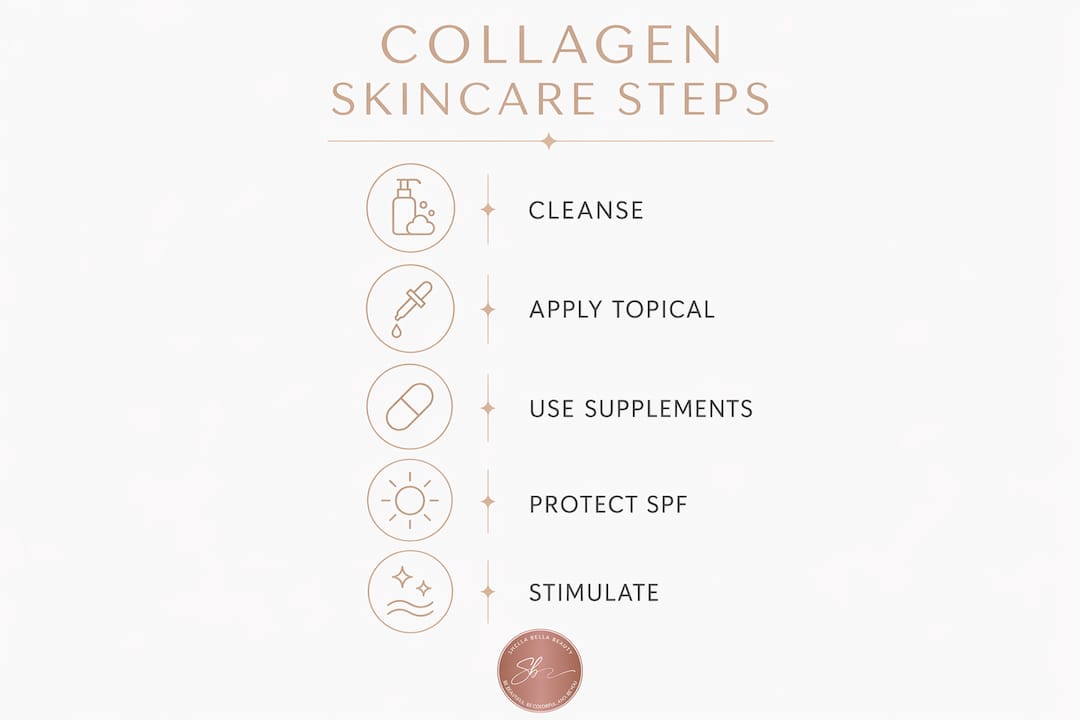
Do oral collagen supplements actually improve skin?
Oral collagen supplements deliver results that topical products cannot. Oral hydrolyzed collagen taken for 8–12 weeks improves skin elasticity and reduces wrinkle depth more effectively than topical collagen. The mechanism is systemic. When you consume hydrolyzed collagen, the dipeptides and tripeptides it contains circulate in the bloodstream and signal dermal fibroblasts to produce new collagen.
Marine and bovine-derived hydrolyzed peptides typically provide Types I and III collagen, which are the most relevant for skin health. Marine collagen is often favored for its smaller peptide size and high bioavailability. Bovine collagen is widely available and provides both Type I and Type III in a single source.
| Collagen source | Types provided | Key benefit |
|---|---|---|
| Marine (fish) | Type I | High bioavailability, fine texture support |
| Bovine (cow) | Types I and III | Broad skin elasticity and firmness support |
| Vegan amino acid blends | Precursors only | Supports synthesis without animal-derived collagen |
Oral collagen peptides circulate in the bloodstream and directly stimulate dermal fibroblasts, enhancing skin quality in ways that topical application cannot replicate. Clinical research shows increased collagen synthesis and measurably improved elasticity after consistent supplementation.
“A comprehensive skin quality approach that includes hydration, collagen protection, and stimulation surpasses relying solely on collagen products. Oral supplementation, combined with collagen-supportive topical actives, represents the most evidence-backed strategy for meaningful skin improvement.” The Bombay Skin Clinic
Consistency is the deciding factor with oral collagen. Results are not immediate. An 8–12 week commitment at a clinical dose is what the research supports, and skipping days undermines the cumulative signaling effect on fibroblasts.
What are the top collagen-boosting skincare ingredients?
Collagen-stimulating ingredients in your topical routine can accomplish what collagen molecules in a cream cannot. Integrating vitamin C and retinoids is more effective for collagen synthesis than relying on collagen molecules themselves in creams. These actives work at the cellular level to trigger your skin’s own production pathways.
The most effective collagen-supporting ingredients, used in a deliberate layering sequence:
-
Vitamin C (L-ascorbic acid): Vitamin C is a required cofactor in collagen synthesis. Without it, the body cannot form stable collagen fibers. A well-formulated vitamin C serum, applied in the morning, protects existing collagen from oxidative damage while supporting new production. Pair it with your skincare active ingredients for a layered approach.
-
Retinoids (retinol, retinal, tretinoin): Retinoids increase cell turnover and directly stimulate fibroblast activity. They are among the most studied ingredients for collagen preservation and are particularly effective for addressing fine lines and texture changes over time.
-
Peptides: Signal peptides, such as Matrixyl (palmitoyl pentapeptide-4), communicate with fibroblasts to increase collagen production. They are well-tolerated across skin types and work synergistically with both vitamin C and retinoids.
-
Antioxidants: UV exposure, smoking, and sugar degrade collagen, accelerating aging. Antioxidants like niacinamide, resveratrol, and vitamin E neutralize the free radicals responsible for that breakdown. Understanding antioxidants in skincare is as important as understanding collagen itself.
-
Broad-spectrum SPF: Sunscreen is the single most effective collagen-preservation tool available. UV radiation is the leading environmental cause of collagen degradation, and no serum can undo daily unprotected sun exposure.
Pro Tip: Layer vitamin C in the morning under SPF, and apply your retinoid at night. This timing maximizes each ingredient’s effectiveness and avoids the photosensitivity that retinoids can cause in sunlight.
When topical products and supplements are insufficient for advanced concerns, in-clinic treatments like microneedling stimulate controlled wound healing that enables new collagen synthesis. These professional options are worth considering when visible laxity or deep texture concerns are present.
How to build a collagen skincare routine that works
A collagen skincare routine works best when it combines realistic expectations with a layered, consistent approach. The most common mistake is relying on a single collagen cream and expecting structural results. Topical collagen hydrates beautifully. Structural renewal requires more.
Consider these principles when building your routine:
- Choose products with hydrolyzed collagen or amino acid precursors. Look for glycine, proline, and hydroxyproline on ingredient lists. These support your skin’s own collagen synthesis rather than sitting on the surface.
- Add an oral collagen supplement with a clear source. Marine or bovine hydrolyzed collagen at a clinical dose, taken daily for at least 8–12 weeks, is what the research supports. Vegan amino acid blends are a valid alternative for those avoiding animal-derived ingredients.
- Pair collagen products with vitamin C and a retinoid. This combination addresses collagen from three angles: stimulation, protection, and surface renewal. For guidance on mixing skincare ingredients, thoughtful layering makes a measurable difference.
- Protect your investment with SPF every morning. All the collagen support in your routine is undermined by unprotected UV exposure. Sunscreen is not optional in a collagen-focused regimen.
- Avoid overloading your routine. More products do not equal more collagen. A focused routine with well-chosen actives outperforms a shelf of overlapping formulas.
A serum routine for fine lines that incorporates collagen-supportive actives alongside a daily supplement creates the most complete approach. Patience and consistency, not volume of product, define the outcome.
Key Takeaways
Collagen skincare delivers its most meaningful results when topical hydration, oral supplementation, and collagen-stimulating actives like vitamin C and retinoids work together as a unified, consistent ritual.
| Point | Details |
|---|---|
| Topical collagen hydrates, not rebuilds | Collagen creams plump and soften the surface but cannot reach the dermis to restore structural collagen. |
| Oral supplements stimulate from within | Hydrolyzed collagen peptides signal fibroblasts to produce new collagen after 8–12 weeks of daily use. |
| Vitamin C and retinoids drive synthesis | These actives stimulate your skin’s own collagen production more effectively than topical collagen molecules. |
| SPF preserves what you build | UV exposure is the leading cause of collagen breakdown; daily sunscreen protects your entire collagen investment. |
| Consistency defines results | No single product delivers lasting change. A layered, sustained routine is the only approach the research supports. |
Collagen in 2026: what I’ve learned after years of watching trends come and go
By Marshella
The collagen category has grown enormously, and with that growth has come a great deal of noise. I’ve watched products promise structural skin renewal through a cream that, by the laws of molecular biology, cannot reach the dermis. I understand the appeal. The marketing is beautiful, and the desire for firmer skin is real. But I’ve come to believe that the most respectful thing you can do for your skin is to understand what each product actually does.
What I’ve found genuinely works is a layered approach: a well-formulated vitamin C serum in the morning, a retinoid at night, a quality oral collagen supplement taken daily, and consistent SPF. That combination addresses collagen from multiple angles simultaneously. No single product in that lineup is magic. Together, they create conditions where your skin can genuinely restore itself over time.
The piece most people skip is the oral supplement, often because it feels less immediate than a serum. But the fibroblast stimulation that oral collagen peptides provide is the closest thing to actual collagen renewal that a non-clinical product can offer. I’d prioritize it over any collagen cream.
What I’d encourage you to resist is the idea that more products equal better skin. A focused, evidence-informed routine, tended with patience, will always outperform a crowded shelf of overlapping formulas. Your skin responds to care that is consistent and intentional, not care that is frantic and excessive.
— Marshella
Shellabellabeauty’s collagen-supportive skincare rituals
Shellabellabeauty was built on the belief that radiance is not manufactured. It is returned to. The Renewal and Smoothing Skincare Rituals collection reflects that philosophy, bringing together formulations designed to support the skin’s natural restoration process with intention and care.

Each ritual in the collection incorporates ingredients that align with what the research supports: hydrating actives that honor the skin’s surface, and formulations that work in harmony with a collagen-focused routine. For those building a complete regimen, the Deep Hydration Skincare Rituals collection pairs beautifully with a daily collagen supplement to reinforce moisture at every layer. Shellabellabeauty’s Glow Chronicles library also offers ingredient education to help you make confident, informed choices at every step of your ritual.
FAQ
What is the role of collagen in skin health?
Collagen is the primary structural protein in skin, forming the fibrous network that maintains firmness, elasticity, and density. Types I and III are the most abundant and are the key targets for both supplementation and collagen-supportive skincare.
Can collagen creams actually rebuild skin collagen?
No. Topical collagen molecules are too large to penetrate the dermis, so they act as humectants rather than structural rebuilders. They improve surface hydration and temporarily soften fine lines, but they do not replace lost dermal collagen.
How long does oral collagen take to show results?
Clinical research supports a consistent daily regimen of 8–12 weeks before measurable improvements in skin elasticity and wrinkle depth become visible. Skipping doses reduces the cumulative fibroblast-signaling effect.
Which ingredients boost collagen production most effectively?
Vitamin C, retinoids, and signal peptides are the most evidence-backed topical ingredients for stimulating collagen synthesis. Vitamin C is a required cofactor in collagen fiber formation, making it the most foundational of the three.
Does sunscreen protect skin collagen?
Yes. UV exposure is the leading environmental cause of collagen degradation. Daily broad-spectrum SPF is the most effective collagen-preservation step in any skincare routine, protecting the collagen your skin already has and the new collagen your routine helps build.
Recommended
- What Helps Skin Look More Radiant? – Shella Bella Beauty™
- The Role of Antioxidants in Skincare Explained – Shella Bella Beauty™
- The Refined Guide to Skincare Layering for Radiant, Balanced Skin. – Shella Bella Beauty™
- How to Restore the Look of Radiant Luminous Skin – Shella Bella Beauty™
- Join Glow Chronicles™ — Continue the Glow™ with editor’s picks, seasonal beauty rituals, exclusive skincare insights, and new editions delivered to your inbox.